Screenwriting: it’s just like copywriting

I’m currently reading Tales from the Script, a compendium of advice from lots of great Hollywood screenwriters (William Goldman, Frank Darabont, Paul Schrader, Shane Black etc.). I think the book may just be a transcription of the movie:

I got to a point about halfway through where I started to notice many parallels between that process and the process of getting an ad made:

Steven E De Souza (48hrs, Die Hard) says, ‘One of the things you can do is leave opportunities for plug-and-play. See, if they can say anything interesting in the meeting they can think it’s their idea. Then they’re invested.’ This mirrors the common practice of making the client feel part of the creative process; not in a cynical, duping way, but just making sure you leave room for a possible contribution from an unexpected place. In both industries the days when an original script would go through to production without touching the sides are long gone. Better to be aware of, and therefore prepared for, the contribution of the client/studio.

Billy Ray (Flightplan, State of Play) suggests that ‘you have to listen to their problems but ignore their solutions’. I think that can apply in many cases, too. When you think about it, the script review dynamic is an odd one: work that takes a long time to craft is often assessed almost spontaneously, with rewrites and amendments suggested, often by non-writers, with a few seconds of thought. I don’t entirely agree with Mr. Ray because I think other people’s solutions can sometimes be good and valuable, and even if they’re wrong they can give good insight into what the person judging the ad or screenplay might be looking for.

Gerald DiPego (Sharky’s Machine, Phenomenon) warns that ‘maybe it was original script that they loved, but now they’ve read it five times, so the thrill is gone‘. This is an interesting scenario that is common, but difficult to avoid. The development and production process of movies and commercials is necessarily far too long to maintain the same level of delight from beginning to end, so it helps to be aware of that and make sure what is being presented has at least some new element about it that keeps it fresh.

Zak Penn (The first three X-Men films, The Incredible Hulk) reminds us that ‘being too passive is something that can really bite you on the ass. You have to fight through that natural inclination some people have to go with the flow. The flow will push you right out the door.’ Sound familiar? ‘Yes, Mr./Mrs. Client, of course we’ll do that, Mr./Mrs. Client. Anything you say, sir/ma’am.’ Eventually that will lead to poor work, zero mutual respect and no strength in really pushing hard for something you believe in. Of course, there are some clients and development execs who think they know best about every little thing, but enabling that on a long-term basis is a path to poor work and being put up for pitch. The same applies to teams and their CDs: standing up for what you think is right (in the right way) will gain you respect, and, possibly, a better ad.

Finally, Charles Vignola, in his capacity as Director of Development at Bruckheimer Films (Pirates of the Caribbean, National Treasure etc.), explains the process from the other side of the fence and comes across rather like a CD. He describes his job as one part ‘panning for gold‘ – trying to find the best material amongst the work writers submit to him. The second part is ‘developing the material to the point where we can attach a director‘. That is of course essentially what CDs do, so sometimes it’s worth realigning your perspective on the part you play in the process and realising that at some point you become the client. When that happens you can understand what people who have to approve your work actually go through. Perhaps they’re not as bovine as you think.

Appy parking

image002
Another excellent side project, this time from former BBH, DDB and RKCR/Y&R creative, Dan Hubert:
What have advertising and parking got in common? Well not a lot to be honest, except that I have decided to convert my skills of turning complicated client briefs into a single minded proposition and applying it to the confusing world of parking.
I realised that there was not one single destination or brand that people could turn to to gain peace of mind about parking before they set off on a journey. There are too many signs, too many websites and too many apps all showing different things. The answer to all this is AppyParking which launched in January this year.
 
It shows over 1,800 controlled parking zones in London which means you can discover if it’s OK to park on single yellow lines and even discover free parking areas in places you wouldn’t expect. If free isn’t an option then AppyParking shows every other possible parking alternative.  You can book car park spaces (coming soon) and even book a place on people’s driveways. AppyParking is also connected to the council’s parking systems so you can find all the paid meter bays, disabled, motorbike and electric charging bays, as well a showing petrol stations and prices. 
Damn, I wish I’d had that idea (and the gumption to make it happen).
Best of luck, Dan
(Apologies for the shit WordPress type formatting.)


Jack, jack, ja jack jack your body, Jack ya, jack, jack ya, jack your body, Jack, jack, ja jack jack your body, Jack ya, jack, jack ya, jack the weekend

Horrible DJ poses (thanks, D).

The Ice Cream Van (thanks, J):

Police 5 (remember that? Keep ’em peeled) NZ stylee (thanks, J):

https://www.youtube.com/watch?v=gRf1NaHuBgw

Seinfeld nothing supercut (thanks, J).

Amazing reviews of Mr. Men books (thanks, D).

Don Draper advice (thanks, D).

Enjoy this before the Jennifer Lawrence backlash begins (thanks, J).

Horribly designed products (thanks, J).

The ending of  The Sopranos properly explained (thanks, J).

Blow up the type (thanks, M).

Wes Anderson is centred:

…While Malick loves fire and water:

36 minute version of Wuthering Heights actually works (thanks, T):

Christopher Walken dances:

https://www.youtube.com/watch?v=sNaau2uPFqI


Oh dear…

BjHZf8YIAAEMqjv


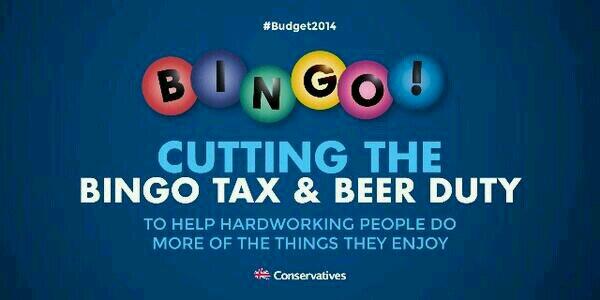
This honestly, without exaggeration for comic effect, seems to me like the work of a satirical anti-Conservative blog.

Unfortunately it isn’t.

I guess the intention might have been good, but if it was then the people behind this poster must be a bit unintelligent or out of touch. And they only cut the beer duty by 1p!

‘I say Dave, we’ve reduced the tax on that thing the poor do together – the numbers get called and they all drink or something…?’

‘Going to the alehouse?’

‘No, no – although we have reduced the cost of that as well. No, it’s something called… um… (looks it up) Bingo!’

‘What is it?’

‘Bingo!’

‘I know you’ve worked out what it is, but what is it?’

‘No, it’s called ‘Bingo’.’

‘What on earth is that?’

‘It’s what hardworking people do. That and drinking.’

‘I thought benefit cheats liked drinking.’

‘Them too, but the hardworking poor like both bingo and drinking so I thought we could put up a poster saying how nice we’ve been to them.’

‘You mean pat ourselves on the back for helping the scum of this country alleviate the misery of their everyday lives in a slightly cheaper manner?’

‘Exactly!’

‘Yes, well why not? It’s not often we do anything nice for anyone.’

‘That’s what I thought. So I’ll get (who on earth came up with this thing?) to come up with something.’

‘Thanks, George.’


Ricky Gervais

Here’s a new Audi ad featuring Ricky Gervais:

https://www.youtube.com/watch?v=TGITKd1cFDQ

I wonder why he did that. I mean, he doesn’t need the money, so if he was going to do something like this I’d have thought he’d want to make sure it was, well, not shit.

Unfortunately this is a bit not-not-shit. It’s an old idea, poorly crafted, that ends up in a generic empowerment message. Mr. Gervais’s involvement seems puzzling to me.

While I’m here I’ll just mention that Ricky did a Pizza Hut VO for me back in the early days of The Office. He was lovely, and obviously far more discerning back then 😉

UPDATE: and there’s more (alas, it’s not better)…

https://www.youtube.com/watch?v=wt1QJFZezS4

https://www.youtube.com/watch?v=Gx1YzGpQeVk

(Thanks for nothing, J.)


Just add lots of men to one woman

I saw this in the cinema the other day:

https://www.youtube.com/watch?v=Lm4oiLzJs2g

On the surface it’s just one of those bland, pan-global vanilla-blancmange cackheaps.

But the ending’s a bit odd, isn’t it? That lady on the jetty has the opportunity to spend time with one random, hunky bloke then she drinks the magic elixir (Coke Zero) and more men appear from under the water, ready to please her. She shrugs apologetically at the somewhat put-out first bloke and…

And what?

And, we can only assume, she enjoys a twentysome where she gets shagged by many random strangers.

Now, I’ve read enough of the Just Seventeen problem page to know that this might be a fantasy for a few ladies out there, but I struggle to believe it’s the cup of tea of enough women to stick it in an ad for Coke Zero.

Of course, many a ‘lucky lad’ has ended a Lynx ad with a bevy of scantily-clad beauties by his side, but it felt as if that lazy sexism was there for the depressing titillation of the adolescent boys. That didn’t make it any better, but flipping the genders just seems odd, particularly for a drink that has thus far been marked to men, and not without a fair bit of sexism of its own:

So I’m confused. I’m also aware that I’m giving this way more thought than it deserves, but y’know, if Germaine Greer isn’t going to stand up for the fairer sex then someone has to take the job on.

And it might as well be me.


Poor authors

If you want to be rich you should probably do anything other than writing books.

For a long time the pay has been steadily decreasing, as has the number of opportunities to get out there and have a chance at nabbing a decent share of the shrinking pie.

From my own experience, on a good advance (20k), the effort worked out at around 3k a year after tax and agent’s fees, so I’m quite glad I simultaneously held down a day job. For the literary authors who are doing phenomenally well to sell 5000 copies the money is even worse, and it might take them longer to produce their ‘better’ work.

But does that matter? There so many books out there, both fiction and non-fiction, that it’s hard to shed a tear for anyone who feels the urge to have a go, only to see the kind of financial return that would just about stretch to a packet of teabags. There are plenty of good books out there, but how good exactly is a matter of opinion. However we tend to regard literature as a more noble art form than most, the consumption of which is like munching on kale, as opposed to the cheeseburgers of cinema, or the dark chocolate cupcakes of erotic photography. So many of us feel that books must continue, must be protected and must be financially beneficial for the author in a way that allows him or her to do their best work without the distraction of the poor house. That way the education and imaginations of future generations will be secured and the mirror that good art holds up to life will remain intact.

But that’s obviously not what’s happening. Instead, long-form writing is becoming something that must be slotted in around other ways of generating an income. And is that so bad? Surely the adverse conditions might be a fillip to drive the author on to greater heights of quality and/or quantity (‘If I don’t finish this book to an excellent standard I’m going to be eating food out of bins’ can surely be a powerful encouragement).

On the other hand, perhaps the tough conditions will put potential authors off. We’ll never know how many great works have been lost to those who prioritised paying their mortgage with a full-time job over starving in a garret to produce a book that lights up the minds of a few thousand people. And you don’t have to take the example that far: how many books have been turned in at the 9/10 mark because the author needed the cash more than he or she wanted to put in the hours to elevate it to 10/10?

Then again, I’m sure this is the way it’s always been: a few artists have been patronised by the mighty, or were fortunate enough to work from a position of financial independence, and we’ve been left with the literature that resulted. No one knows, and no one can ever know, if the work would have been better any other way, or what difference that would have made. Instead, we’ve plodded along in a so-so manner, gaining insights into life that most people soon forget as they go about their existences in exactly the way they did before they read The Corrections or The Art Of Fielding. Would we currently be in the throes of climate change, oppression or global bloodshed if a great book had pointed us persuasively in the other direction?

This brings us to the question how writing might be prioritised by society. I read recently that we could have perpetually renewable energy for the same price as the HS2 train link. Why would anyone choose the latter over the former? Well, plenty are doing just that, loudly and with passion. Should we prize financial benefits for authors over repairing roads? What about over building missiles no one will ever fire?

Interestingly, one American corporation has recently demonstrated that they do indeed prize literature over money (kind of). Could this be the beginning of the turning of the worm? I hope so; after all, art may not strictly be essential but it does make life worth living.


Shooting stars in midnight pastures and hanging out on clouds beneath the moon. Hitching rides on magic carpets, it’s a fairy tale to me but you’re in the weekend

Mmmm… Pornburger (thanks, V).

Jeff Goldblum laugh remix (thanks, J):

Words fail me:

LA gangbangers in Syria.

The 53 best clips from The Day Today (thanks, C).

And a magical bit of unseen Brasseye (thanks, T):

http://www.youtube.com/watch?v=nZAnj1pEcuw

What you sound like to foreigners (thanks, J):

Model dances involuntarily to Pump Up The Jam (thanks, T):

Saul Bass’s concepts for a poster for The Shining, and Stanley Kubrick’s rejection notes (thanks, T).

Guy scares co-worker. Same reaction every time (thanks, C).

Man goes to ‘Magic: The Gathering’ tournament and poses next to butt cracks (thanks, J).

Charlie Brooker discusses Breaking Bad with Vince Gilligan (thanks, J):

Rejection letters of the famous (thanks, J).

WOWS chest thump remix (thanks, J):

Wes Anderson is a just a rip-off merchant (of his own work. Thanks, T):

And brilliant advice (thanks, W).


sneaky but likeable advertising

I love the fact that it’s really entertaining and well shot and funny, then it’s an ad for helping people out.

Along similar lines…

https://www.youtube.com/watch?v=6wGN-lbd7Ss

Very good: you get to enjoy the back and forth between the Pres and Zach, then there’s a message about healthcare.

If I were Dave Trott, at this point I’d mention something about predatory thinking. The problem: young people aren’t engaged in the process of Obama’s online healthcare thingie, so how do we slip that message to them in a way they’ll enjoy, pass around and respond to? Answer: (oddly) Between Two Ferns. Then they actually went and did it (can you imagine David Cameron trying to pull off something similar?).

Usually I think I’d feel a bit cheated about these ‘sneaky’ messages but they’re both for great causes and work so well (healthcare enquiries went up 40% after the BTF thing was shown) that I’m happy to be violated in the above manners.

While I’m here, another blogger has explored honesty in advertising.

Update: there’s also sneaky and not likeable.

But there’s an enjoyable counterpart to such deceit:


Page 8

This is another side project, but a very intriguing one:

Hi Ben,

After being discouraged by the high quality of the side-projects you post I almost didn’t send you this email, but then I had lunch and so here we are.
 
So me and my art director were tossing around conspiracy theories the other day, and this is how the idea for Page8 was born: what if the most interesting or inspiring content isn’t on the first page of Google? Where would you put something you don’t want anybody to find? The 8th page of Google search results, surely. 
 
The idea was further tossed around and refined a bit, and ended up being: http://askpage8.com/
 
Feel free to play around, and refresh the page sometimes – it has nicely weird changing backgrounds for the joy of repeat users.
 
We’re also collecting some of the more entertaining finds at, yes, http://foundonpage8.tumblr.com/
 
If you think this is fun to share and saves you another post to write, then please do so. Otherwise, please tell us why you won’t share it.
 
Trusting that one takes more energy than the other,
wishing you all the best,
Ramin and Judit
Thanks, R & J. I like this idea a lot. I mean, how many times does Google throw up hundreds of thousands of results, only for you to stop at the third one? What happens further down the line?
Well, now you can find out the easy way.